top of page

About the PI

  • Google Scholar
  • LinkedIn
  • YouTube

Prof Shyue Ping Ong is the Provost's Chair Professor in Materials Science and Engineering at the National University of Singapore. He is widely recognized as one of the pioneers of foundation potentials, i.e., machine learning models with comprehensive coverage of the periodic table, with broad applications in materials discovery and design. Prof Ong is also the founder and lead developer of pymatgen, one of the most popular open-source libraries for materials analysis, and a core contributor to the Materials Project, a public platform that provides computed properties of tens of thousands of inorganic compounds. He has authored more than 150 peer-reviewed articles and has been recognized as a Clarivate Highly Cited Researcher since 2021. He was also a recipient of the prestigious US Department of Energy Early Career Research Program and the Office of Naval Research Young Investigator Program awards. 

Experience

2026 - 

Provost's Chair Professor

Materials Science and Engineering

National University of Singapore

2021 - 2025

2017 - 2021

2013 - 2017

Professor

Associate Professor

Assistant Professor

Aiiso Yufeng Li Department of Chemical and Nano Engineering

University of California San Diego

Education

2006-2011

Doctor of Philosophy

Materials Science and Engineering

Masschusetts Institute of Technology

1995-1999

Master of Engineering

Bachelor of Engineering

Major: Electrical and Information Science

First Class Honours

Awards: Institute of Civil Engineers' Baker Prize

Team Members

Ruiqi Chen

Ruiqi Chen

Research Fellow

Ruiqi obtained her PhD in Chemistry, Mineralogy and Geology through a joint program between Centrale Lille (France) and St Petersburg University (Russia), and earned her BSc and MSc from St Petersburg University. Previously, she researched the characterization and synthesis of mineral-inspired materials for energy applications. Ruiqi conducts research on AI for materials development, including automated experimental capabilities and generative AI–driven material generation and design. In her spare time, Ruiqi enjoys badminton.
Yiqing Chen

Yiqing Chen

Research Fellow

Yiqing received her PhD in Materials Engineering from McGill University and her B.Eng. from Tongji University. Before joining NUS, she was a postdoctoral fellow at Northwestern University and the University of Toronto. She currently works on computational catalysis and the application of MLIPs to problems in materials science.
Atharva Vilas Vyawahare

Atharva Vilas Vyawahare

Graduate Student

Atharva joined NUS as a PhD student. He received his Master's degree in Metallurgy and Materials Engineering from the Indian Institute of Technology Madras and his Bachelor's degree in Metallurgy and Materials Engineering from the National Institute of Technology Durgapur. His previous research focused on developing and deploying machine learning interatomic potentials to predict the properties of metal–nitride systems.
Sojung Koo

Sojung Koo

Graduate Student (UCSD)

Sojung is PhD student in Chemical engineering at UCSD, joined Prof. Ong’s group in 2023. She received MS in Mechanical engineering and BS in Chemical engineering at KyungHee University. Her current research focuses on complex interface system design and ion-transport mechanism study for all-solid-state batteries. Leveraging a thorough understanding of atomistic simulation, she is interested in exploring undiscovered inorganic material properties through foundation potentials and data-driven approaches. Her ultimate goal is to develop more intuitive frameworks for understanding materials and broaden the influence of computational research within the materials science field.
Runze Liu

Runze Liu

Graduate Student (UCSD)

Runze Liu is a PhD student at the University of California, San Diego. His research focuses on large-scale atomistic simulations and machine learning interatomic potentials for predicting materials properties across diverse chemical spaces. Specifically, he contributes to the development of foundational datasets and software infrastructure for universal machine learning potentials, enabling more accurate and efficient prediction of mechanical, thermodynamic, and transport properties. Runze has extensive experience in density functional theory, molecular dynamics, and workflow automation on high-performance computing platforms, and works closely with computational and experimental collaborators to accelerate materials design.
Longyun Shen

Longyun Shen

Research Fellow

Longyun received his PhD degree from the Hong Kong University of Science and Technology (HKUST) in August 2025. His research integrates density functional theory calculations, AI-assisted property prediction, experimental studies, and advanced characterization techniques to investigate ion transport mechanisms in solid electrolytes and interfacial stability at electrolyte–electrode interfaces. He is especially interested in integrating data-driven approaches with first-principles simulations to address challenges in complex crystalline and amorphous solid electrolyte systems. His work aims to bridge theory and experiment, accelerating the rational design of high-performance solid-state battery materials.
Harpriya Minhas

Harpriya Minhas

Research Fellow

Harpriya obtained her PhD degree from the Indian Institute of Technology Indore. Her research integrates machine learning approaches, including GNN-based models and machine learning interatomic potentials, with first-principles simulations to accelerate the design of functional materials. She focuses on uncovering structure-property relationships using atomistic simulations and data-driven methods to advance next-generation energy materials.
Haizhou Zhan

Haizhou Zhan

Graduate Student

Haizhou is a PhD student in the Department of Materials Science and Engineering at NUS. He received his M.S. in Materials Science and NanoEngineering from Rice University and previously worked at Contemporary Amperex Technology Co., Limited (CATL), where his research focused on the solvation structures of lithium-ion battery electrolytes and the development and validation of machine learning interatomic potentials for multicomponent electrolyte systems. His current research focuses on AI-driven materials discovery, with particular interests in developing machine learning interatomic potentials and computational workflows for the design of solid-state electrolytes.
Ting Wang

Ting Wang

Graduate Student (UCSD)

Ting is a PhD student at UC San Diego in Prof. Shyue Ping Ong’s group. She received her M.S. from Columbia University and her B.S. from Lehigh University. Her work applies atomistic simulations and data-driven modeling to study materials for all-solid-state batteries, focusing on how defects, dopants, and structural disorder influence lithium-ion transport and interfacial stability. She is mainly working on improving the rate capability of cathode coating materials and investigating interfacial phenomena in all-solid-state batteries.
Vasiliki Faka

Vasiliki Faka

Research Fellow

Vasiliki obtained her PhD in Inorganic and Analytical Chemistry from the University of Münster. Her research focuses on solid electrolytes for solid state batteries using advanced characterization techniques, including neutron and synchrotron X-ray powder diffraction. She is interested in bringing experiment and theory and her work aims to advance automated platforms for the synthesis and characterization of inorganic materials, ultimately enabling autonomous materials discovery.
Chayaphol Lortaraprasert

Chayaphol Lortaraprasert

Graduate Student
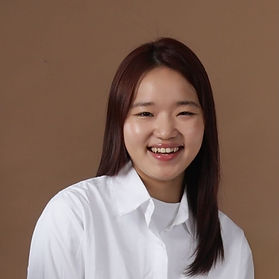
Chayaphol was a graduate student at MIT working on bridging machine learning and atomistic simulations and cloud-native RAG LLM-powered research assistant. Bachelor and Master of Engineering from the University of Tokyo as a recipient of the Japanese Government scholarship. Proficiency in Python, PyTorch, and SQL. Academic and industrial track records in RAG Agents & LLMs, materials informatics, artificial intelligence, quantum machine learning, finance, marketing, and policymaking.
Keith Phuthi

Keith Phuthi

Postdoctoral Associate (UCSD)

Keith Phuthi has been a postdoc in the lab since 2024. He obtained his PhD and Masters in Mechanical Engineering from the University of Michigan and Carnegie Mellon University respectively and BS in physics from MIT. He focuses on the application of atomistic simulation and machine learning to problems in energy storage and materials science.
Zihan Yu

Zihan Yu

Graduate Student (UCSD)

Zihan Yu is a PhD student. He earned his master's degree from the University of Pennsylvania and his bachelor's degree from Lehigh University. His research focuses on developing solid-state materials that can safely and efficiently conduct ions in next-generation batteries. He also applies machine learning interatomic potentials to enable large-scale atomistic simulations that bridge the gap between first-principles accuracy and computational efficiency. By combining materials science and artificial intelligence, his work aims to accelerate the discovery and optimization of advanced battery materials.

Integrity

We practice integrity in all forms. We are honest and fair to fellow group members and collaborators. We have a zero-tolerance policy towards plagiarism and falsification of results.

Excellence

We strive for excellence in everything that we do. We stand by the quality of our science. We aim to develop scientists with great analytical, technical and communication skills.

Teamwork

We believe great teamwork is the key to great science. We share and discuss ideas freely. We strive to build great collaborations, both within and outside of the group. We contribute actively to the materials science community.

National University of Singapore
College of Design and Engineering
Department of Materials Science and Engineering
9 Engineering Drive 1, Blk EA, #03-09
Singapore 117575
Singapore 

  • Linkedin
  • Youtube
  • GitHub


© 2026 by Materialyze.AI.

bottom of page